


Carrot and Stick——軟硬兼施
** combining reward and punishment to influence behavior
~~ 獎懲制度/方法/政策/途徑;軟硬兼施;恩威並用
~~ reward and punishment system/approach/policy/method; merit and penalty; praise and reprimand
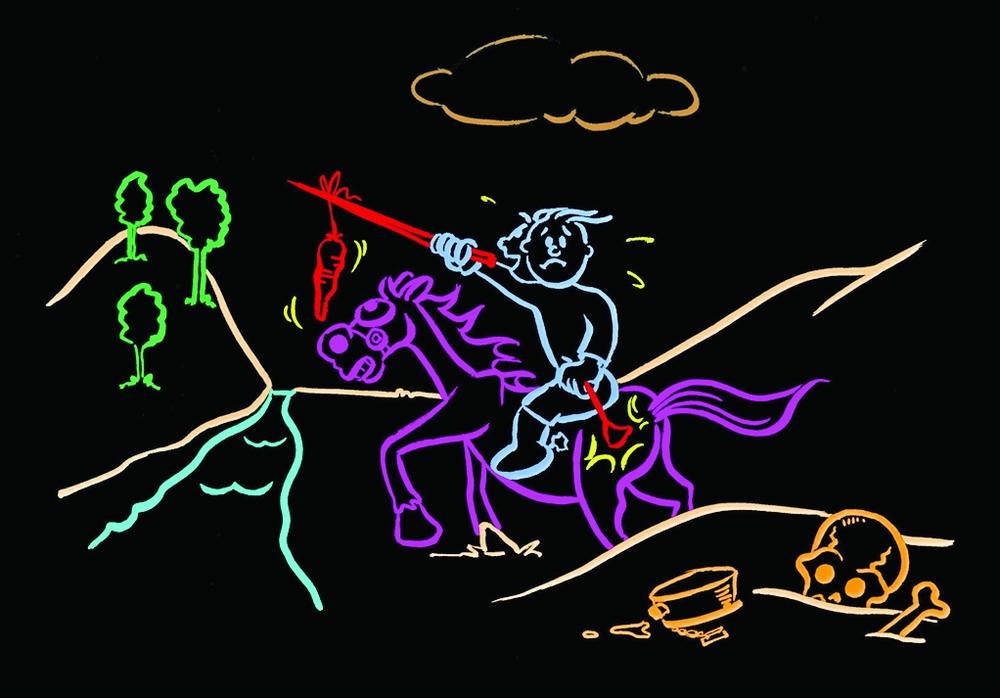
!! The metaphor comes from the practice of training or motivating a beast of burden -- typically a donkey, mule, or horse -- by offering a carrot (reward) as an incentive to move forward, while simultaneously using a stick (punishment or threat) to urge it along if it refuses. The first recorded use of the phrase in English appears in 1848 in a British economics journal, The Economist, referring to Irish labor relations: "The carrot and the stick -- reward and punishment -- are the two great forces by which mankind is governed."
這個隱喻源自訓練或激勵馱畜(通常是驢子、騾子或馬)的做法:用胡蘿蔔(獎勵)激勵牠們前進,同時用棍棒(懲罰或威脅)驅趕不肯前進的牲畜。英語中最早使用該隱喻的記錄出現在一八四八年英國經濟學期刊《經濟學人》上,指的是愛爾蘭的勞資關係:“胡蘿蔔和棍棒——獎勵和懲罰——是治理人類的兩大力量。”
>> The U.S. is using a carrot-and-stick approach with Iran -- carrot: lifting sanctions in exchange for nuclear limits; stick: military action.
美國對伊朗採取軟硬兼施的策略——胡蘿蔔:解除制裁換取伊朗限制核子計劃;大棒:採取軍事行動。
學勤教育中心英語專科導師 李啟文 教 授